Learn what an RCD does, why RCD protection is important and where it is typically required in electrical installations under current UK Wiring Regulations.
An RCD is one of the most important protective devices in a modern electrical installation, yet many homeowners and business owners are unsure what one actually does or where it is required. This short guide explains the basics in plain English, based on the current UK Wiring Regulations, BS 7671.
What Is an RCD?
RCD stands for Residual Current Device. An RCD continuously monitors the electrical current flowing through a circuit. In a healthy circuit, the current flowing out to the equipment and the current returning are balanced. If the RCD detects an imbalance, it means some current is flowing along an unintended path, for example through a damaged cable, or through a person touching a live part. When this happens, the RCD automatically disconnects the supply.
This provides additional protection against electric shock. It works alongside fuses and circuit breakers (MCBs), which protect against overcurrent, overload and fault currents, but cannot detect the small imbalanced currents that an RCD is designed to catch.
What Does an RCD Look Like?
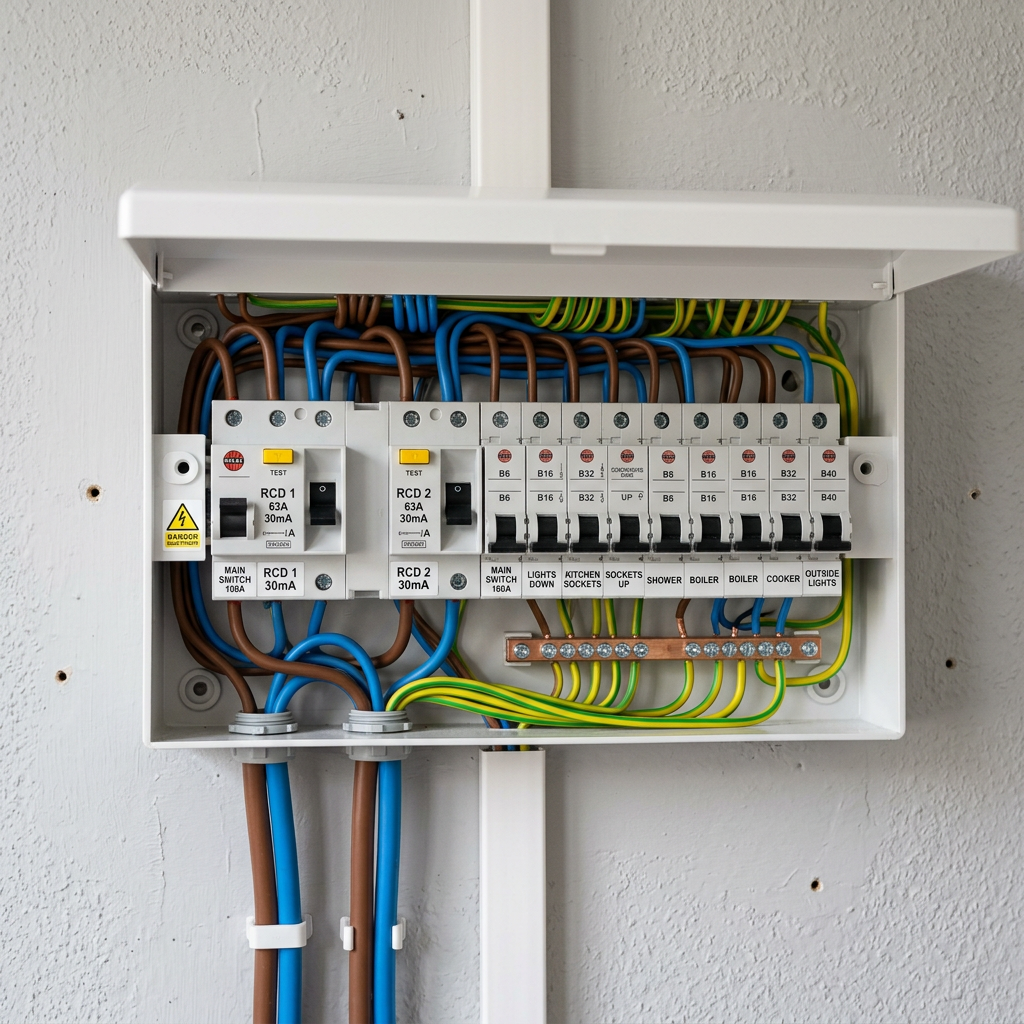
RCD protection is normally found within the consumer unit, sometimes called the fuse board or distribution board. Traditionally, a single RCD protects a group of circuits. In modern installations, it is more common to see individual RCBOs, one per circuit.
- RCD/RCCB - provides residual-current protection but does not itself provide overcurrent protection, so it works in combination with fuses or MCBs.
- RCBO - combines residual-current protection and overcurrent protection for an individual circuit. If a fault develops, only that circuit is disconnected, so the rest of the installation keeps working.
You can usually identify an RCD or RCBO by the Test button on the front of the device.
Where Is RCD Protection Required?
Under the current edition of BS 7671, additional protection by an RCD with a rated residual operating current of 30 mA is required in many common situations, including:
- Socket-outlets rated up to 32 A where the applicable requirements call for additional protection.
- Socket-outlets in dwellings, where all socket-outlets rated up to 32 A require 30 mA RCD protection, with a limited exception for specific sockets under the control of skilled or instructed persons.
- Mobile equipment intended for use outdoors, such as lawnmowers and power tools, where supplied through a socket-outlet rated up to 32 A.
- Low-voltage cables concealed in walls or partitions where the relevant BS 7671 conditions apply, for example cables buried less than 50 mm from the surface outside of designated safe zones, without equivalent mechanical protection.
- Lighting circuits in dwellings, including circuits supplying luminaires.
- Circuits serving rooms containing a bath or shower, where socket-outlets and other equipment require additional protection.
- Electric vehicle charging points, which require RCD protection appropriate to the type of charger installed.
- Floor and ceiling heating systems.
Similar requirements apply to commercial and industrial installations, and the exact requirements always depend on the equipment, the environment and how the installation is used. This is why circuit design and certification are jobs for a qualified electrician, not rules of thumb.
What About Older Installations?
If your property was wired before these requirements applied, it does not mean your installation is unsafe or must be upgraded overnight. RCD requirements apply to new installations and to additions and alterations to existing ones. If your consumer unit has no RCD protection, the sensible step is to have the installation professionally assessed, then decide what, if anything, needs updating.
Checking Your Protection
Most RCDs and RCBOs have a Test button. Pressing it regularly, following the manufacturer's guidance, confirms the device still trips and disconnects the supply. It is also worth checking whether your sockets and lighting circuits are RCD protected, either by looking at the consumer unit or by asking an electrician during an inspection.
How Relay Electrical Services Can Help
Relay Electrical Services carries out Electrical Installation Condition Reports (EICRs), consumer unit upgrades and circuit alterations for homeowners and businesses across Somerset, Dorset and the South West. If you would like your installation assessed, or you are planning work that needs RCD protection, get in touch for a free, no-obligation quote.
Need Expert Electrical Advice?
Relay Electrical Services cover Somerset, Dorset and the surrounding areas. Get in touch for a free, no-obligation quote.
Get a Free QuoteRelated service: Electrical Testing & EICR
More Articles

Home Audio & Installed Sound: What Q Acoustics Brings to the Modern Home
6 October 2026
Large Renovation Projects in Somerset & Dorset: Why You Need a Professional Electrical Contractor
20 May 2026